
Gut Health and Metabolism: How Your Microbiome Controls Energy and Fat Burn
Gut Health and Metabolism: How Your Microbiome Controls Energy and Fat Burn
Your metabolism determines how efficiently your body converts food into energy. But what many people don’t realize is that gut health plays a central role in regulating metabolism.
If your metabolism feels slow, your gut microbiome could be the hidden factor holding you back.
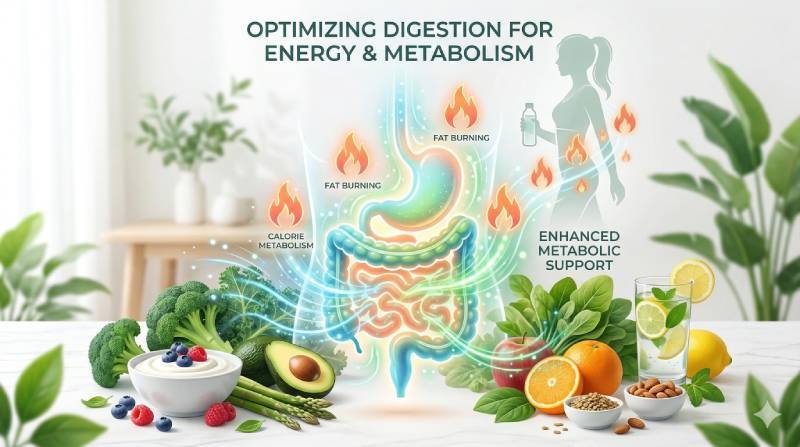
What Is Metabolism?
Metabolism refers to all the chemical processes that occur in your body to maintain life, including:
- Converting food into energy
- Burning calories
- Regulating body weight
Your metabolic rate is influenced by multiple factors — including your gut bacteria.
👉 Learn the full foundation here: How to Improve Gut Health Naturally
How Gut Health Impacts Metabolism
1. Energy Extraction from Food
Different gut bacteria extract different amounts of calories from the same foods.
A microbiome imbalance may cause your body to store more energy as fat instead of using it efficiently.
2. Regulation of Fat Storage
Certain bacterial strains influence how your body stores fat.
When harmful bacteria dominate, fat storage increases — especially around the abdomen.
3. Hormonal Control
Your gut regulates key hormones such as:
- Insulin
- Leptin
- Ghrelin
These hormones directly affect hunger, fat storage, and metabolic speed.
4. Inflammation and Metabolic Slowdown
Chronic inflammation disrupts metabolic function.
An unhealthy gut increases inflammation, making it harder for your body to burn calories efficiently.
👉 Check if your gut may be compromised: Signs of Poor Gut Health
Best Gut Bacteria for Metabolism
Some beneficial bacteria are linked to improved metabolic performance:
- Akkermansia muciniphila
- Lactobacillus gasseri
- Bifidobacterium species
These strains help regulate fat storage, improve insulin sensitivity, and enhance energy use.
How to Boost Metabolism Through Gut Health
1. Increase Fiber Intake
Fiber feeds beneficial bacteria and supports metabolic balance.
2. Add Probiotics
High-quality probiotics can restore microbial balance and improve metabolic efficiency.
👉 Compare the best options here: Best Gut Health Supplements 2026
3. Eat Whole, Unprocessed Foods
Processed foods damage gut bacteria and slow metabolism.
4. Manage Stress
Chronic stress negatively impacts gut health and metabolic function.
Gut Health vs Slow Metabolism: Warning Signs
- Difficulty losing weight
- Constant fatigue
- Sugar cravings
- Bloating and digestive issues
👉 Learn how gut imbalance affects your body: Best Probiotics for Bloating
Final Thoughts
Your metabolism is not just about calories — it’s deeply connected to your gut.
By improving your microbiome, you can:
- Burn fat more efficiently
- Increase energy levels
- Improve overall metabolic health
Fix your gut, and your metabolism will follow.